Onimai, Gender Performativity, and the Phenomenology of Fetishism
Mar 30, 2026
This essay was originally posted on cohost—before their untimely demise—by our local pornographer, Mad Holy. You can follow them here.
A Pedantic Introduction
Another cohost user by the name of kastelpls (@highimpactsex) recently wrote an informal essay on the topic of the manga/anime Onii-chan wa Oshimai!, or as it is often abbreviated, Onimai. The essay focuses on the presence of urolagnia (urination fetishism) in Onimai and examines how certain paraphilia may be used in fiction to comment on queer identity by problematizing gender norms. As I am responding to Kastel’s essay, it is recommended that you read it prior to reading this post as I will be attempting to expand upon ideas established in their original post.
One aspect of Kastel’s essay that I hope to rectify in this post is their seeming dismissal of academia. Academia is not for everyone. It just isn’t. Although I could resurrect the specter of Roland Barthes and yap about the task of the public intellectual in the wake of a bourgeois regnum, doing so helps nobody. Not everyone who invests their time in theory will come out the other end fulfilled. As such, it is not in my interest to criticize Kastel for not enjoying Judith Butler’s Gender Trouble: Feminism and the Subversion of Identity (1990). That is purely a matter of taste. Likewise, it is also not appropriate to criticize them for finding more material meaning in Onimai’s exploration of gender than in academic literature on the subject.
(Personally speaking, my own interest in academia stems directly from my want to apply theory to media I like, Onimai included.)
What I do believe is worth criticizing, however, is the nature in which academia is brought up in the essay. Despite finding Gender Trouble “deeply unreadable” (Kastel), Kastel still takes its central thesis, that gender is performative, as a prerequisite by which to analyze Onimai. Similarly, while Kastel praises the book Mother Camp: Female Impersonators in America (1972), they dismiss it and other explorations of drag culture as “outdated and a bit irritating.” (Kastel) These comparisons only seem to have been made for the purposes of propping up Onimai as a more relevant text for today’s discussions surrounding gender and transgender identities, but doing so is unfavorable to Mother Camp. By isolating the book from the context in which it was written (Nixon era America directly following the Vietnam War and its ensuing culture wars), it overlooks the cultural and socioeconomic reasons for why queer people felt it necessary to express themselves in the ways they did. It also assumes that the queer people who lived under such hegemonic regimes had better alternatives than the ones they took. A criticism I often see regarding overtly subversive films like The Rocky Horror Picture Show (1975) or Funeral Parade of Roses (1969) is that, by engaging in self caricature and theatrical hyperbole, their homoeroticism risks affirming homophobic stereotypes of queer people. However, this criticism presupposes that homophobic individuals would have ever accepted queer people to begin with regardless of whether their filmic depictions conformed to more normative standards of the day.
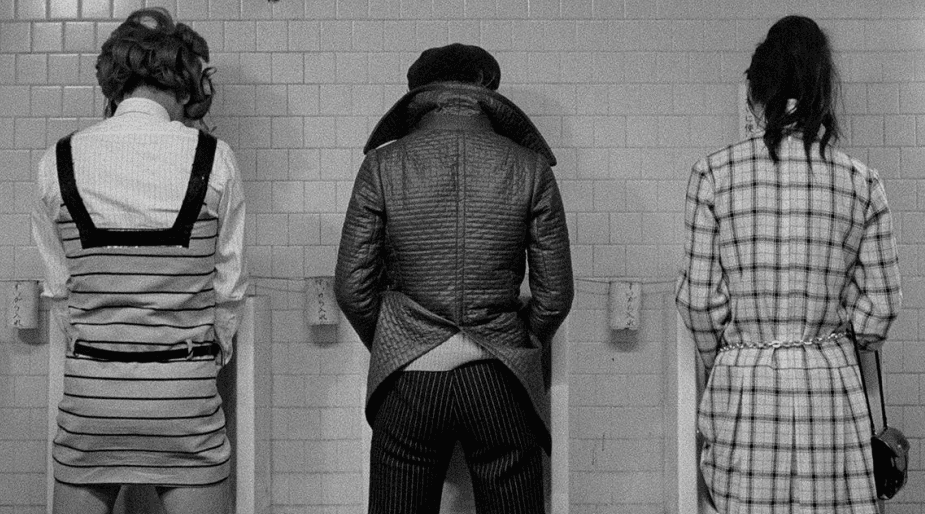
Funeral Parade of Roses is the coolest movie ever.
Likewise, comparing Onimai to Mother Camp in this way is an unfavorable method for discussing Onimai as many queer people actively do not want to associate it with queer culture. In the same way that 20th century drag culture may seem problematic by today’s standards, Onimai’s depictions of fetishism (specifically lolicon) are seen by many as problematic due in large part to current bigoted stereotypes surrounding transgender people. (The Fox News fearmonger favorite of “they’re indoctrinating your kids,” to name one terrible example.) At the same time, others argue that many of Onimai’s fetishes do not represent a queer gaze at all, but rather the gaze of hetero male otaku. Onimai’s positioning within gender and queer discourse has never been stable and, as such, we should not assume that it will ever be stable or that it should ever be stable. Although I will argue in favor of Onimai’s utility as a queer allegory, I would like the point to stand that the queer media which we find resonant and transgressive in today’s society will most likely be viewed as “outdated and a bit irritating” fifty years from now much in the same manner that we may retroactively criticize certain aspects of drag culture from fifty years ago. While self criticism will always be necessary and important for developing understandings of queer cultures as they stratify over time, it is nevertheless my contention that constructive criticism can only be achieved by engaging more deeply with the subject matter at hand and by recontextualizing its significance simultaneously in both the then and in the now. In short, while Onimai may teach us a lot about queer identity, academia and critical theory will only ever increase our understanding of Onimai as it exists now, in the future, and, eventually, in the past.
I am, admittedly, nitpicking Kastel’s essay a lot in this opening, almost to the point of being mean, which, given I am fairly certain that Kastel would likely not disagree with a lot of the points I am making, might make me seem snobbish. My purpose in being so overly pedantic towards what was an otherwise informal primer on the topic of fetishism and queer expression is, contrary to how it may seem, not to be an elitist prick, but to highlight, like Butler in Gender Trouble, how language as an agent within the constitution of meaning requires careful consideration when dealing with arguments about gender. My goal with this blog is thus to expand upon the points which Kastel establishes in their essay about Onimai, gender performativity, and the use of fetish humor in the exploration of queer expression by applying a phenomenological framework to the concept of fetishism as it pertains to the construction of identity and gender. In doing so, I hope to affirm Kastel’s positioning of Onimai as a queer text by analyzing Mahiro as an anxious subject of gender transition. Let’s dig in, shall we?
A Primer on Gender Performativity
Before we discuss fetishism and its role in Onimai, we must review our prerequisite theory of gender performativity. Despite the phrase “gender is a social construct” having become borderline household banter, this phrase doesn’t adequately articulate the nuance with which Judith Butler argues it in Gender Trouble. As a matter of fact, Butler begins the book by criticizing previous arguments of gender construct theory as containing circular logic in its distinguishing of the terms “sex” and “gender”:
“The presumption of a binary gender system implicitly retains the belief in a mimetic relation of gender to sex whereby gender mirrors sex or is otherwise restricted by it. When the constructed status of gender is theorized as radically independent of sex, gender itself becomes a free-floating artifice, with the consequence that men and masculine might just as easily signify a female body as a male one, and woman and feminine a male body as easily as a female one.” (Butler, 10)
If sex is an inherently gendered category, but gender is the cultural interpretation of one’s sex, then how can we confidently argue that gender construct theory is emancipatory and not predeterministic? As Butler notes, if gender is understood as a passive recipient to culture, then gender “is as determined and fixed as it was under the biology-is-destiny formulation.” (Butler, 12) This leads Butler to question the mechanisms by which gender is constructed. Citing Luce Irigaray, Butler positions gender within the context of a “phallogocentric signifying economy” (or, in simpler terms, a language or system of meaning biased towards masculine identity) before then asking “Is it possible to identify a monolithic as well as a monologic masculinist economy that traverses the array of cultural and historical contexts in which sexual difference takes place?” and “Is the failure to acknowledge the specific cultural operations of gender oppression itself a kind of epistemological imperialism, one which is not ameliorated by the simple elaboration of cultural differences as ‘examples’ of the selfsame phallogocentrism?” (Butler, 18) These questions serve as the springboard for Butler’s poststructuralist aim to both subvert the totalizing nature of a masculinist signifying economy while still remaining self critical of feminist discourse that unintentionally mimics imperialistic systems of signification. In doing so, Butler formulates a theory of gender as being fluid rather than static by acknowledging individual agency in its construction without rejecting materialist assumptions about gender as a relational attribute in the phenomenological sense. This theory is summarily expressed through the verb of performativity as opposed to previous theorists’ positioning of gender as a noun (construct):
“[G]ender is not a noun, but neither is it a set of free-floating attributes, for we have seen that the substantive effect of gender is performatively produced and compelled by the regulatory practices of gender coherence. Hence, within the inherited discourse of the metaphysics of substance, gender proves to be performative—that is, constituting the identity it is purported to be. In this sense, gender is always a doing, though not a doing by a subject who might be said to preexist the deed.” (Butler, 33)
Signification is not a predetermined set of attributes, but rather a series of repeated stylizations of the body that eventually take the appearance of a natural attitude. Avenues for alternative expressions of gender identity, therefore, are stylized through the same “governing signification” that seeks to restrict them, a variation on repetition that fashions the self and the system from within by turning those material conditions of restriction back on themselves.
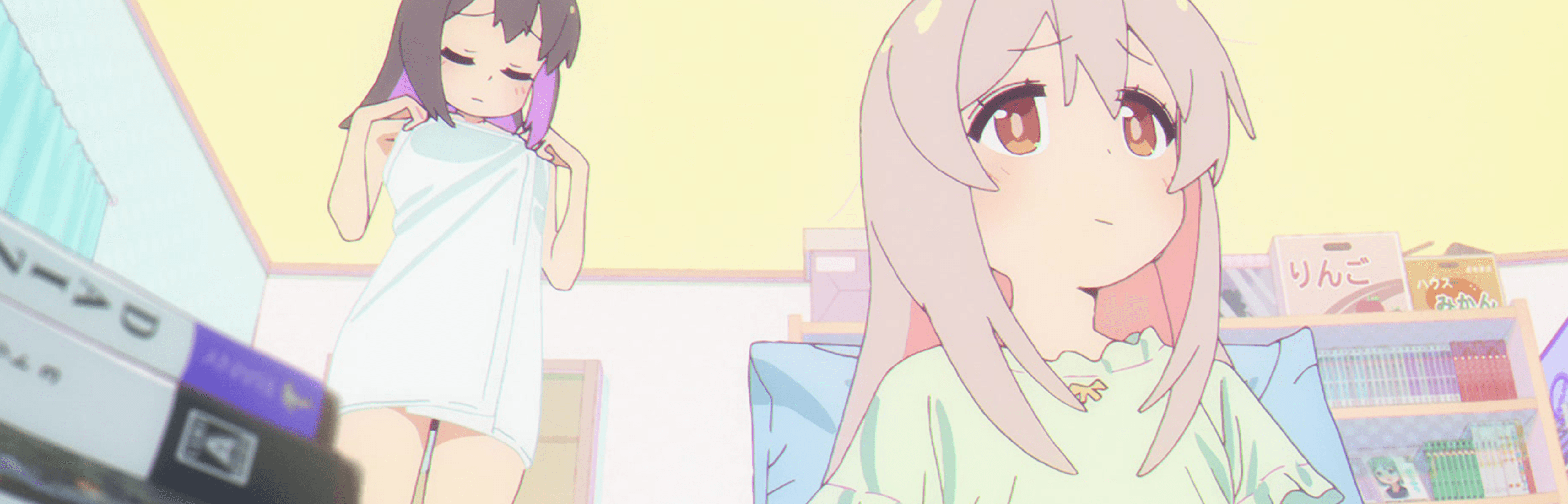
So how can Onimai be read within the framework of gender performativity? Better yet, what parts of Onimai can’t be read within that framework? The series’ primary conceit sees a twenty year old man turned into a middle school aged girl. Comedic moments in the show often revolve around Mahiro behaving in masculine ways while other characters react with varying degrees of shock, confusion, or curiosity at the disparity between his actions and his perceived female sex. Other times the comedy stems from Mahiro’s own anxiousness. In transitioning to female, he frequently second guesses how he believes he should act in accordance to the expectations of others and, in many instances, himself. This Double Consciousness under which Mahiro repeatedly fashions himself forms the crux of Onimai’s commentaries on gender performance.
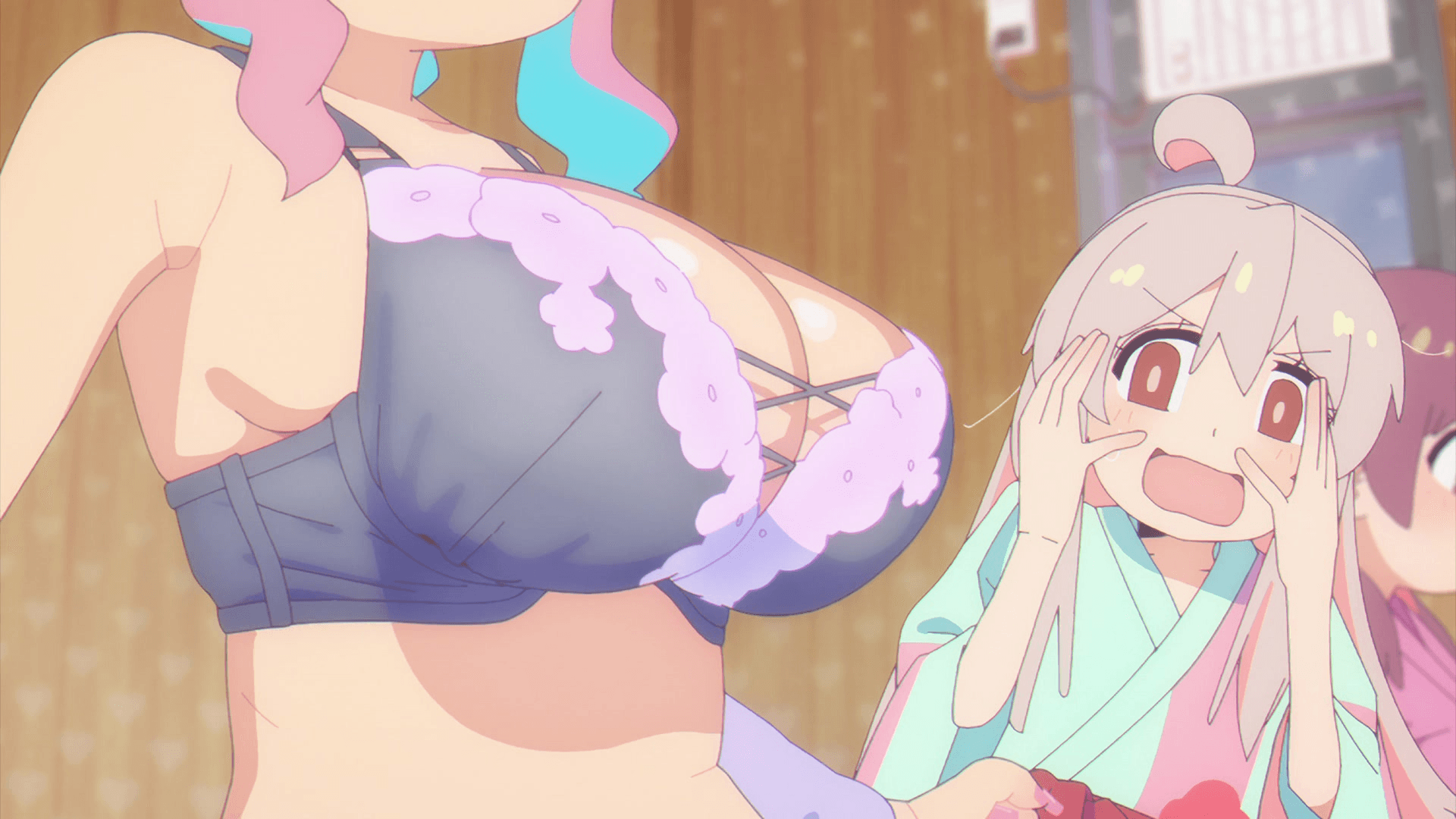
Other characters face similar conflict. Momiji, for example, is a tomboyish girl whose masculine expression is both challenged and affirmed by the difference Mahiro presents. Her older sister, Kaede, embodies the exact opposite disposition with her behavior and appearance representing more traditional conceptions of femininity, herself stating in episode 3 “I’m the domestic type.” What’s notable is how these two sisters are compared and contrasted by their character designs, but more specifically by their breasts. Kaede’s breasts are (especially in the anime) larger than average while Momiji’s are relatively flat. To compare the two to another queer manga, Bokura no Hentai by Fumi Fumiko, the character of Hacchi begins the story tomboyish like Momiji, but, upon growing larger breasts during puberty, she is made aware of her female sex by the changing attitudes of her male friends and so develops a complex that pressures her into acting more feminine. Onimai seems to thematize such bodily determinism in its character designs: Kaede and Miyo’s large breasts align them with more feminine traits; Momiji and Mahiro’s flat chests align them with more unisex or androgynous traits; and Asahi’s flat chest, by contrast, almost seems to suggest a total lack of sex in her pre-pubescence.
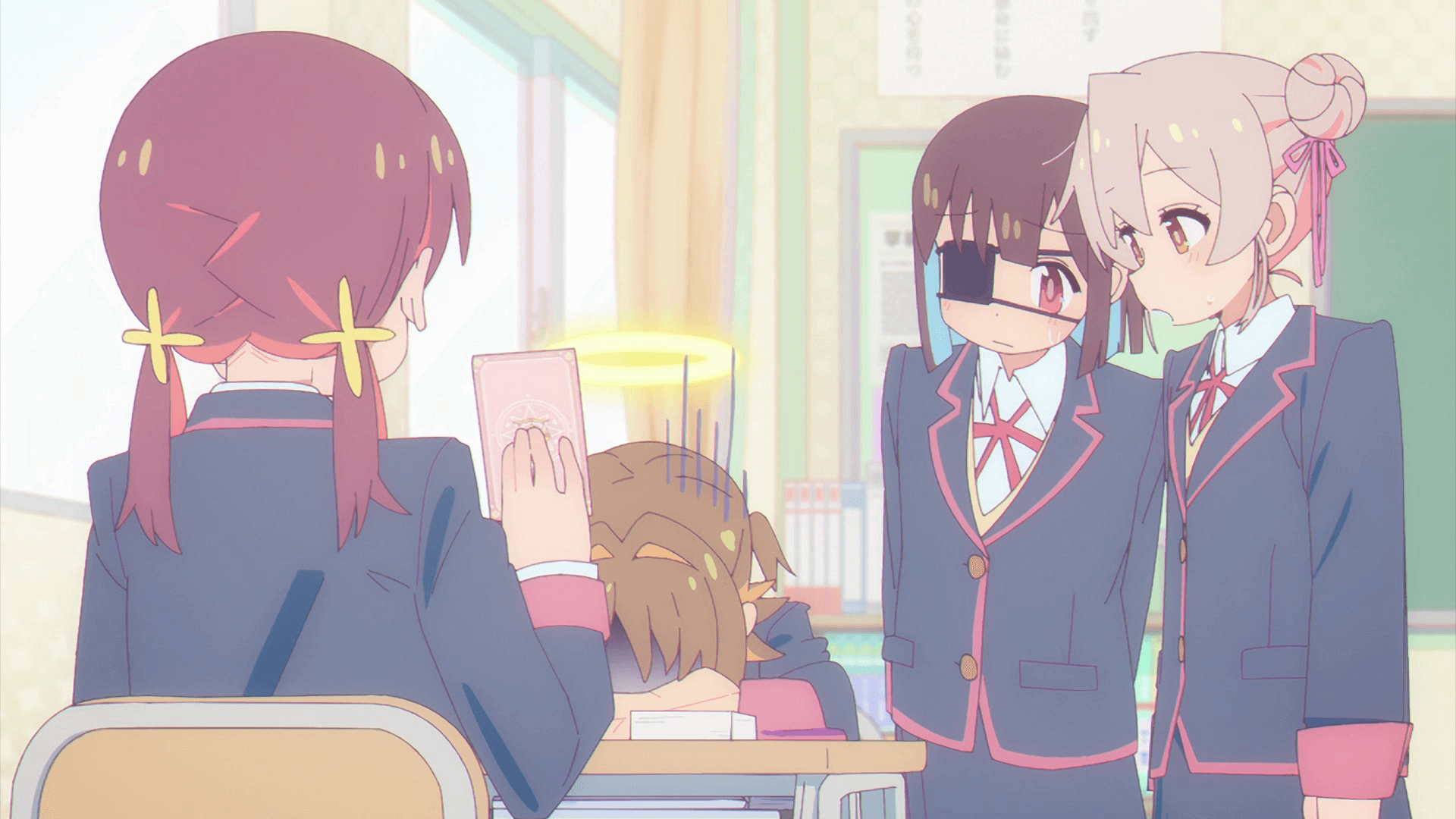
You may have noticed by now that I am referring to Mahiro with he/him pronouns whereas Kastel uses she/her pronouns in their essay. I promise I am not doing this purely for the sake of being a contrarian asshole, but rather to highlight a linguistic element within Onimai that epitomizes the theme of gender performativity. Whenever Mahiro is by himself or alone with his sister, Mihari, they refer to him using masculine pronouns like “boku” and “ore.” Notably, the first episode begins with Mahiro gazing at his newly feminized image in the mirror and stating “Ore Oyama Mahiro wa” (“I am Oyama Mahiro”). This declaration acts as an attempt by Mahiro to reaffirm his presumed male sex in the wake of his present female body, the result manifesting in a perceived contradiction when Mahiro, within the same breath, models his new body in a manner that he imagines a girl might. Despite cognitively verbalizing his masculinity, Mahiro has already begun performing in ways that subconsciously express his femininity. This linguistic contradiction continues later on when Mahiro re-enrolls in school and begins to use feminine and gender neutral pronouns when in the presence of his peers. Privately Mahiro might be male, but socially he is female, and the collapse of these distinctions as the series progresses positions Mahiro as a unique subject who is neither completely male nor completely female.
One of the beauties of Onimai is that the story rarely determines which of Mahiro’s perceived gender identities of male or female hold greater weight. Mahiro is, instead, presented as an individual whose body is in a constant state of flux. This becomes epitomized when Mahiro, on more than one occasion, regrows his penis while still maintaining his female image. Given, as Butler contends, that gender is not a prediscursive or preexisting attribute of one’s identity, the audience lacking any stable image of Mahiro pre-transition might signify how the supposed phallogocentric signifying economy under which he perceives himself and others may have less to do with his previous gender identity and more to do with a general metaphor of gender as a cultural apparatus by which people are expected to repeatedly constitute themselves. With this idea in mind, let’s talk about fetishism.
Fetishism as Preference
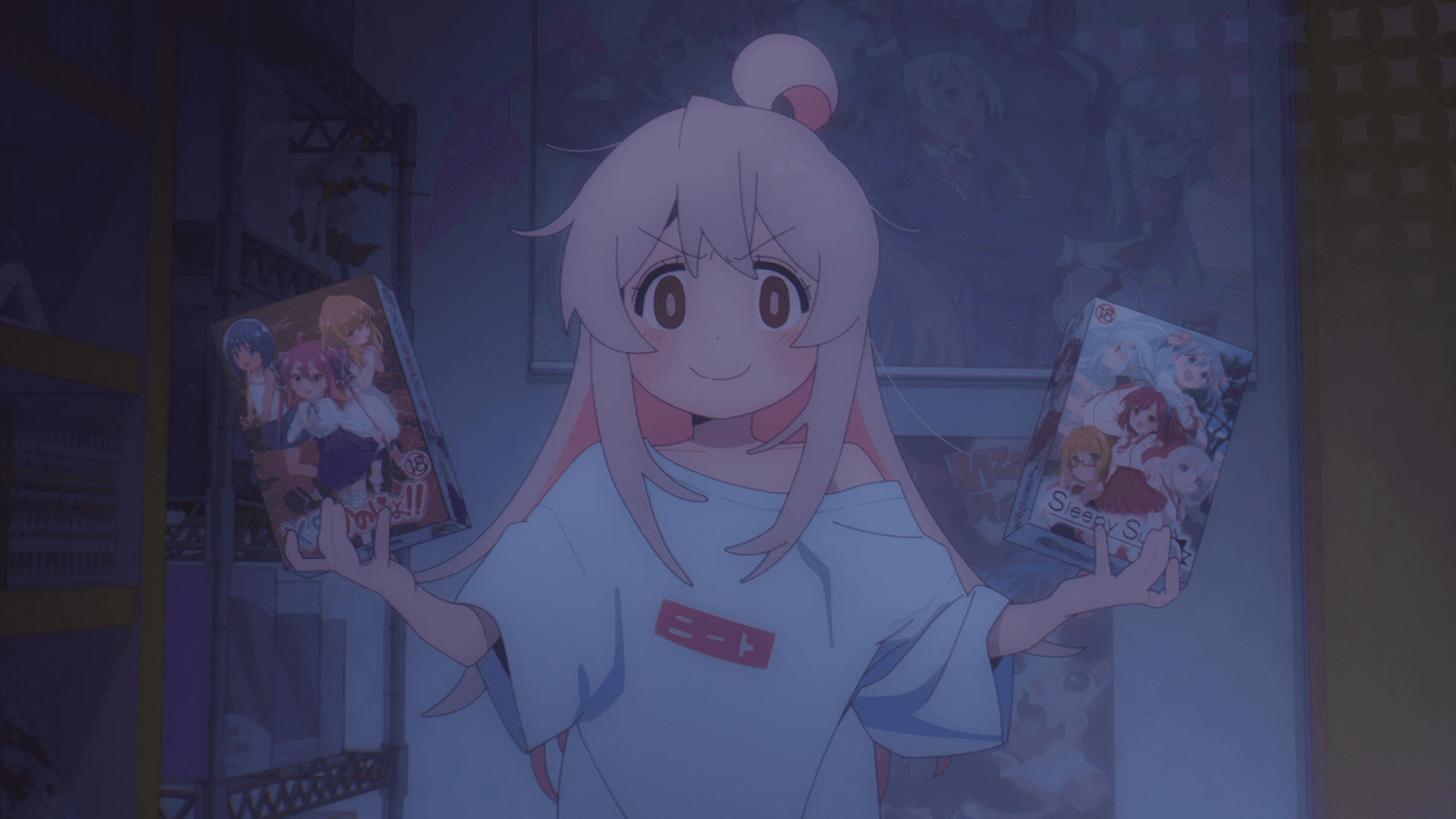
We’ve discussed how gender identity is constituted through a modality of repeated performative actions. The same framework can be used to explore fetishism, but there’s one problem: what even is fetishism? The answer may seem obvious in its contemporary usage regarding sexual habit, but the etymology of the term has evolved significantly since its inception in the 16th and 17th centuries. Originating as the Portuguese term feitiço, meaning “witchcraft” or “magical practice,” it was used by European mercantile traders to demarcate religious items traded by West Africa for their non-Christian character. This anthropo-historic etymology morphed into the pidgin term fetisso in the 17th century before reappropriation of the term in the 18th century was used to refer to West African religion more specifically. Enlightenment thinkers of the 19th century then brought the term “fetishism” outside of its anthropological context and spread it to other disciplines that would eventually pave the way for its more contemporary usage in areas of political economy, psychiatry, and postmodern philosophy during the 20th century.
As may be gleaned from my ultra condensed chronology of the term, fetishism has historically connoted negativity, particularly towards West African religions where fetishism acted as a synonym for the term “idolatry” before its 18th century usage by Charles de Brosses extended it to denote idolatry for any item at all, regardless of origin. The ethnologist Edward Tylor would derive the roots of the term to the Latin word facticius which originally meant “manufactured,” resulting in associations with anti-nature and artifice that would become cemented in Karl Marx’s use of the term “commodity fetishism” in Capital: A Critique of Political Economy (1987). He summarized thusly:
“It is nothing but the definite social relation between men themselves which assumes here, for them, the fantastic form of a relation between things…. There the products of the human brain appear as autonomous figures endowed with a life of their own, which enter into relations both with each other and with the human race. So it is in the world of commodities with the products of men's hands that I call this the fetishism which attaches itself to the products of labour as soon as they are produced as commodities, and is therefore inseparable from the production of commodities.” (Marx, 165)

Our pronouns are petit/bourgeoisie
Like with the anthropological use of the term, Marx’s material fetishism refers to an inscription of meaning, in this case via labor value, to an object of some form. Sandra Hampson, citing Susan Stewart in her dissertation The Decadent Decades: A Phenomenology of Fetishism in the Turn-of-the-Century French Novel (1996), likens the emergence of the term Fetisso during the period of commercial trading between Europeans and West Africans to modern practices of souvenir hunting. She gives the example of miniature Eiffel Towers. Miniaturized replicas of the Eiffel Tower mean little to Parisians who live with and see the structure on a day by day basis. Non-Parisians, however, mark these replicas by their spatial and temporal signification, entailing the souvenir as a fetish in and of itself. Hampson then quotes Jonathon Culler’s observation that “the attraction is not the object itself but the sign referring to it that marks it out as distinctive.” (Hampson, 11)
And then psychoanalysis happened.
To cut a long story short, fetishism in the psychoanalytic theories of Richard von Krafft-Ebing, Magnus Hirshfeld, and Sigmund Freud signified pathological disorders in which a person (usually a man) metonymically substitutes a material object of some sort (usually apparel worn by women) for something desirable (usually women because otherwise they thought that would imply homosexuality in men which they really didn’t like) for the sake of gaining some form of sexual or emotional gratification. At the risk of flattening history more than I already have, I am going to assume that most people already have some understanding of the Freudian variant of fetishism so that I don’t have to spend the next two months making sure I actually understand it in relation to Krafft-Ebing and Hirschfeld, none of whom I have any particular desire to read. Just know that Freud defines fetish as a substitute for the penis. But not just any “chance” penis, though. This is a “particular and quite special” penis. Here’s the full quote:
“When now I announce that the fetish is a substitute for the penis, I shall certainly create disappointment; so I hasten to add that it is not a substitute for any chance penis, but for a particular and quite special penis that had been extremely important in early childhood but had later been lost. That is to say, it should normally have been given up, but the fetish is precisely designed to preserve it from extinction. To put it more plainly: the fetish is a substitute for the woman’s (the mother’s) penis that the little boy once believed in and—for reasons familiar to us—does not want to give up.” (Freud, 1)
I love the phrasing here because it implies that even Freud had some cognizance of how reductive, repetitive, totalizing, and fetishistic his own penile metaphor for psychosis had become. I really have to sympathize with Kastel on this point for finding Butler’s refutations of Jacques Lacan unbearable. No matter how many times I read and reread him and Freud I just feel like they become more and more abstract. I’ll still pin most of that blame onto Lacan rather than onto Butler, but I digress.
What all of these definitions of fetish have in common is an inclination towards preference. As Hampson writes:
“A fetish is an object to which a form of human consciousness is consciously or unconsciously attached. Historians use fetishism to name the acts of human preference for material objects, or those objects which human beings prioritize or to which they give meaningful precedence, more specifically, preference.” (Hampson, 2)
To summarize, fetishism cannot exist without a cognitive subject from whence its attributes are projected outwards onto an object. Objects, immaterial or otherwise, are invested fetishistic value that is inherently subjective in its hierarchical preference over other objects. Fetishism “is a human fiction deriving its import from the polarities emerging from the matrix subject-object” (Hampson, 72), and can serve both as an individual function and as a social function in the subjective characterization of objects. Fetishism, therefore, cannot be said to be preexisting since it is constructed by human subjectivity.
So with all of this in mind, can we finally talk about piss in Onimai?
The Phenomenology of Fetishism (or Finally Talking About Piss In Onimai)
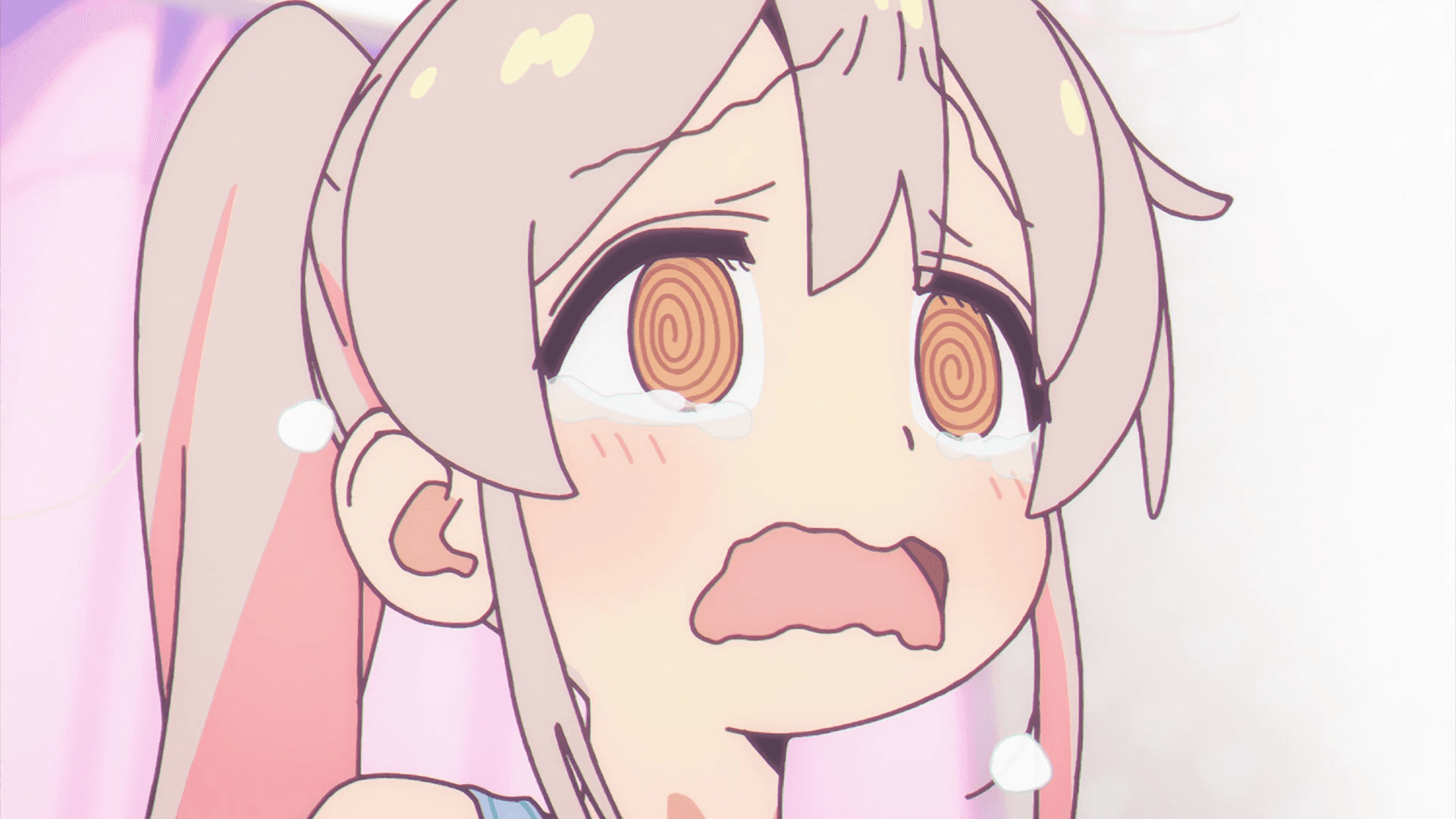
Does Onimai actually have a urination fetish? I believe the answer is yes, but humor me for a moment. Near the beginning of Kastel’s essay they state “No matter how you look at it, Onimai is a fetishistic manga from conception.” (Kastel) While I do not necessarily disagree with this assertion, I think it is worth questioning why we perceive urination in Onimai as fetishistic along with how such an interpretation may have been constructed, because, contrary to our presupposed assumptions about Onimai and its intentions, this interpretation may not be as stable as we previously believed. What is considered fetishistic in Onimai’s depictions of urination often rely on a reading of its author, Nekotofu’s, intent, which is, in many ways, unknowable and thus derives, in large part, from the person attempting to interpret them. Put another way, the onus by which urination in Onimai is designated a fetish is interpreted only by its teleological function as a fetish of Nekotofu and, by extension, the audience’s libido. This is a problem because fetishism in Onimai is, in fact, dualistic in its expression of individual fetishistic gaze and normative biological function.
Similarly, Kastel’s designation of urination and other fetishistic elements within Onimai as “the perverted stuff” (Kastel) supplies a functionality to these elements that may not otherwise convey the nuance of their meaning in Onimai. To paraphrase Butler (because I actually do not remember for the life of me where this statement is located among their writings), the labels of “gay” and “lesbian,” insofar as they are used in English, imply an act of doing. To say that someone is gay often insinuates that they actively seek out same sex partners for romantic or sexual engagement. However, this is, obviously, not always the case. Gayness as a passive status of being is its own nuance that our language does not mechanically distinguish from its perceived active status of doing. Applying this logic to fetishism, the categorization of certain elements within Onimai as “the perverted stuff,” while perhaps unintentional on Kastel’s part, similarly removes the potential for these elements to exist as more than fetish, reducing them, instead, to their base teleological readings as “fanservice.” As such, this designation excludes Onimai’s fetishistic/normative duality and limits our ability to examine how such a duality constitutes Mahiro’s gender identity. This limitation potentially counteracts Kastel’s own argument that “the perverted stuff” can facilitate character growth. Rather than conceive of “the perverted stuff as an environment to imagine absurd scenarios,” (Kastel) I want to posit that perhaps it is that “the perverted stuff” arises both naturally and arbitrarily from the characters’ environment and that these perverted becomings repeatedly reconstitute Mahiro’s gender identity in a phenomenological manner.
(Author’s note: William Pietz’s article, “The Problem of the Fetish” (1985), makes the case that the problem of analytic discourse surrounding the word “fetish” is uniquely rooted in the term’s split etymology: “The field is defined first of all by the usage of the word itself…. this is the only approach that preserves the specificity of the problem, since it does not reduce the notion of the fetish to one or another (particular or universalist) metacode. This historicolinguistic approach makes it impossible to say whether a given object is or is not a fetish in any simple, ahistorical sense.” (Pietz, 15) Kastel shouldn’t necessarily be criticized for this so much as “fetish” as a term’s unsavory and indeterminate roots that make it inherently slippery in most modern contexts.)
To momentarily use an example of fetishism that isn’t urination, let us once again consider breasts in Onimai. (Female) breast fetishism is a common and, arguably, accepted and encouraged fetish under heteronormative epochs. While many women and queer peoples partake in breast fetishism themselves, it is my assumption that the majority of breast fetishism is projected by men. To give a psychoanalytic account, Freud and other psychoanalysts attempted to argue that male desire for female breasts were preexisting and ergo 1.) reinforces a bunk position of biological determinism that does not consider how such fetishism may be constructed socially or within non-hetero subjectivities, 2.) posits the misogynistic assertion that female breasts only exist within phallogocentric signifying economies, and 3.) posits the similarly misogynistic assertion that female breasts are inherently and inevitably fetishistic.
Mahiro at various points in Onimai displays an attraction towards female breasts, even praying his thanks to god after seeing Kaede in a bikini in Episode Three. As such, I feel confident in asserting that breast fetishism exists in Onimai, at least insofar as Mahiro is concerned, because, as the series demonstrates, Mahiro’s view of breasts differs from other female members of the cast. Episode Three is a good case study in that Mihari never expresses opinions about other girl’s breasts until Mahiro forces a comparison between her and Kaede’s. Mahiro, fetishizing female breasts through a male gaze, distinctly views breasts through a philosophy of difference. Mihari and Kaede, however, seem to view breasts outside of a fetishistic gaze, instead seeing the differences in sizes between girls not as a site of envy or competition, but as a site of sympathy and potential kinship.
We discussed earlier how Onimai attributes certain personality traits to characters in a deterministic fashion based on the sizes of their breasts. As a consequence, we may argue that we can extend Mahiro’s male gaze to Nekotofu’s own framework of distinction via difference, thereby arguing Onimai as subservient to phallogocentric desires. However, this argument implies that there is a fixed logic to the gaze within Onimai. Rather, Onimai recontextualizes and destabilizes Mahiro’s gaze through his transition. In moving from male to female, Mahiro also crosses the subject/object dichotomy, effectively entering into his own phallogocentric signifying economy and, thus, being forced to reconsider objects like breasts through an embodied female experience. Fetishism in Onimai is neither preexisting or fixed, but is rather a dynamic process of embodied reconstitutions in the same way that gender performance is according to Butler. Breasts in Onimai, therefore, serve as a site onto which embodied female subjectivity and male-projected fetishism exist simultaneously and act, in the case of Mahiro, as a place for the continual reconstitution of his increasingly complex gender identity.
However, while this argument goes a long way towards explaining Onimai’s employment of and commentary on the male gaze, it still does not fully examine the argument of a preexistent male gaze within Onimai, so let us consider for a moment the identity of otaku in Japan as a presupposition by which Mahiro as a subject is understood to represent and what this implies for a queer reading of Onimai.
The Presupposed Otaku Identity
In the video essay, Everyone Is Wrong About Onimai, YouTuber, Gomi-san, argues that Mahiro acts as a stand-in for male otaku in Japan. Citing a handful of sources, including Patrick Galbraith’s ethnographic study, The Moé Manifesto (2014), Gomi-san recounts how male otaku were often derided in derogatorily feminine or homophobic ways due to their sexual inclinations towards 2-D character images. By living asexual lifestyles wherein the male otaku did not pursue sexual relationships with real women, Japanese commentators began viewing the phenomenon of otaku as a kind of pathological threat to Japan’s heteronormative expectations of men. Feminist writer Mari Kotani summarizes this position in The Moé Manifesto:
“In Japan, ordinary men adhere to the ideals of so-called salaryman society—in which men graduate from a university, get married, buy a house, have children, send their sons to university, and expect to receive a pension and be taken care of by their wives when they retire. Otaku are the outsiders of salaryman society; they do not adhere to these gender norms.” (Galbraith, 34)
The predominant reason cited for otaku’s preferences towards 2-D character images was formulated in the late 1990s and the 2000s with the term, moé. Moé, as it was understood in the 2000s, was a combination of affect theory and phenomenology in regards to a person’s relationship to character images, though more specifically, in the case of anime and manga, to those of youthful girls, or bishoujo. These images were thought to have been drawn in such a way as to contain an essence, or affect, that the viewer would respond to emotionally and, therefore, project desire onto. The fetish, in this case, wasn’t always necessarily the female image itself, but rather the lines that denoted them and the myriad objects (cat ears, bells, maid uniforms, etc.) that conveyed some manner of personality in a purely fictional context. In this sense, it was the fictional quality of the image as a signifier for fantasy that was marked as desirable as opposed to its purely relational quality to “real” women. Although this “Database” model, as Hiroki Azuma terms it in Otaku: Japan’s Database Animals (2001), offers a useful heuristic from which we may analyze the semiotic appeals of moé and manga images, it purely sociological explanation of otaku lacks any kind of sexual evaluation of the group. Despite acknowledging that moé objects are given meaning through their pairing with the female form, Azuma deems otakus’ masturbatory habits towards moé characters as “essentially a matter of nerves” (Azuma, 89) resulting from conditioned physiological reflex via stimulation.

Azuma’s definition of sexuality is, as you may have guessed, incredibly limited. For him, sexuality is defined only in terms of a person’s physical relation to a tangible Other which, given Azuma’s presupposition of a heterosexual male identity for otaku, excludes feminist and queer readings of otaku and moé. Likewise, his position, despite attempting to draw a coherent chronology of otaku and postmodernism, becomes, itself, obsessed with narrative generalizations of otaku who he believes represent the end of sexuality and the regression of people from 20th century snobbery to animalization. This is something that J. Keith Vincent and Dawn Lawson comment on in the translation notes of Tamaki Saito’s book, Beautiful Fighting Girl (2000):
“It is worth noting that for a critic who is so fascinated by the otaku’s deconstruction of grand narratives, Azuma himself is something of a compulsive narrator, be it in the form of constant periodizing of otaku generations or, as Lamarre has also suggested, of the development of media technologies. It could be argued that his celebration of the otaku’s overcoming of the temporality of modernity is rooted in an equally powerful attachment to narrative teleology.” (Saito, 189)
Within the English translation of Beautiful Fighting Girl is commentary regarding an interview between Hiroki Azuma, Tamaki Saito, and the feminist writer, Mari Kotani, the latter two disagreeing outright with Azuma’s stance on otaku sexuality. Saito, a Lacanian psychoanalyst, argues that there is no fundamental difference between sex and masturbation from an analytic perspective while Azuma maintains that masturbation is inconsequential to one’s identity:
“Azuma: But in the end, masturbating to a picture doesn’t add up to anything. Saito: But of course it does! Azuma: No, it doesn’t. There is a huge difference between masturbation and actual sex acts. Kotani: Is there really such a huge difference? I really don’t get men (laughs).” (Saito, xxiii)
I had to add Kotani’s remark at the end because it’s just too funny.
Kotani herself posits in response to Azuma’s claim, that otakus’ desire for fiction differs fundamentally from homosexuality “for particular attire as one’s own sexuality” (Azuma, 89), that the act of stating one’s otakuhood amounts to a similar “coming out” in which the otaku makes public their private masturbatory habits and their sexual orientation towards character images. To state that you are an otaku, according to Kotani, is a political and performative act that constitutes one’s sexuality in the same way that someone stating they are straight, gay, bisexual, or other constitutes their sexual identity individually and publically.
Kotani also reminds us that much of moé’s aesthetic dimensions are rooted in shoujo manga, whose appropriation in the late 1970s by male otaku gave rise to the bishoujo (beautiful girl) trope. Despite this, moé characters in both Azuma and Saito’s writings function primarily in the constitution of heterosexual male desire with little introspection given to how such aesthetics would evolve, how otaku as consumers and creators would evolve both independently and concurrently with future aesthetic trends, or how past and contemporary trends alike would open up to new or alternative markets. Otaku as a group, in this sense, is an expanding concept subject to continual change as anime and manga take on broader definitions within their increasingly globalized identities. (Stevie Suan’s 2021 book, Anime’s Identity: Performativity and Form Beyond Japan is the best source right now for this understanding of anime’s performative identity.) Much like Butler’s acknowledgement of language’s signifying masculine economy, Kotani acknowledges that shoujo manga potentially upholds the tenants of patriarchy, tracing it, as Thomas LaMarre recounts in The Anime Machine (2009), “back to bourgeois family institutions that insisted on cultivation of its girls” (LaMarre, 263). Nevertheless, Kotani concludes that shoujo simultaneously allowed for the formation of a symbolic system for women’s aggressiveness and rebellion, “an effect of materiality, of material conditions turned back on themselves.” (LaMarre, 263-264) Moé, as such, is subject to similar transgressive potential.
Of particular interest, then, is how Onimai’s character designs differ between its manga serialization and its TV anime adaptation. Nekotofu’s manga features character designs more in line with trends from the 2000s with Mahiro sharing aesthetic similarities to moé manga like K-On!, Yuru Yuri, or Kill Me Baby. Looking at Nekotofu’s simplistic lines, one can imagine Onimai being used as one of Azuma’s examples of database consumption, what with Mahiro’s characteristics of wearing oversized T-shirts, having a long hair lick, a Lolita physique, and hyperbolized facial features. The TV anime adaptation maintains these designs, however, it also stresses the sculptural volume of the characters’ bodies, frequently de-flattening their manga iterations and emphasizing details of perceived anatomical realism. This realism destabilizes Azuma’s contention that otaku respond purely to the flattened and fictional aspects of moé characters rather than sexually to its representation of the female form and, in doing so, makes the obvious case for a conception of fiction is appropriately multilayered rather than technologically deterministic.
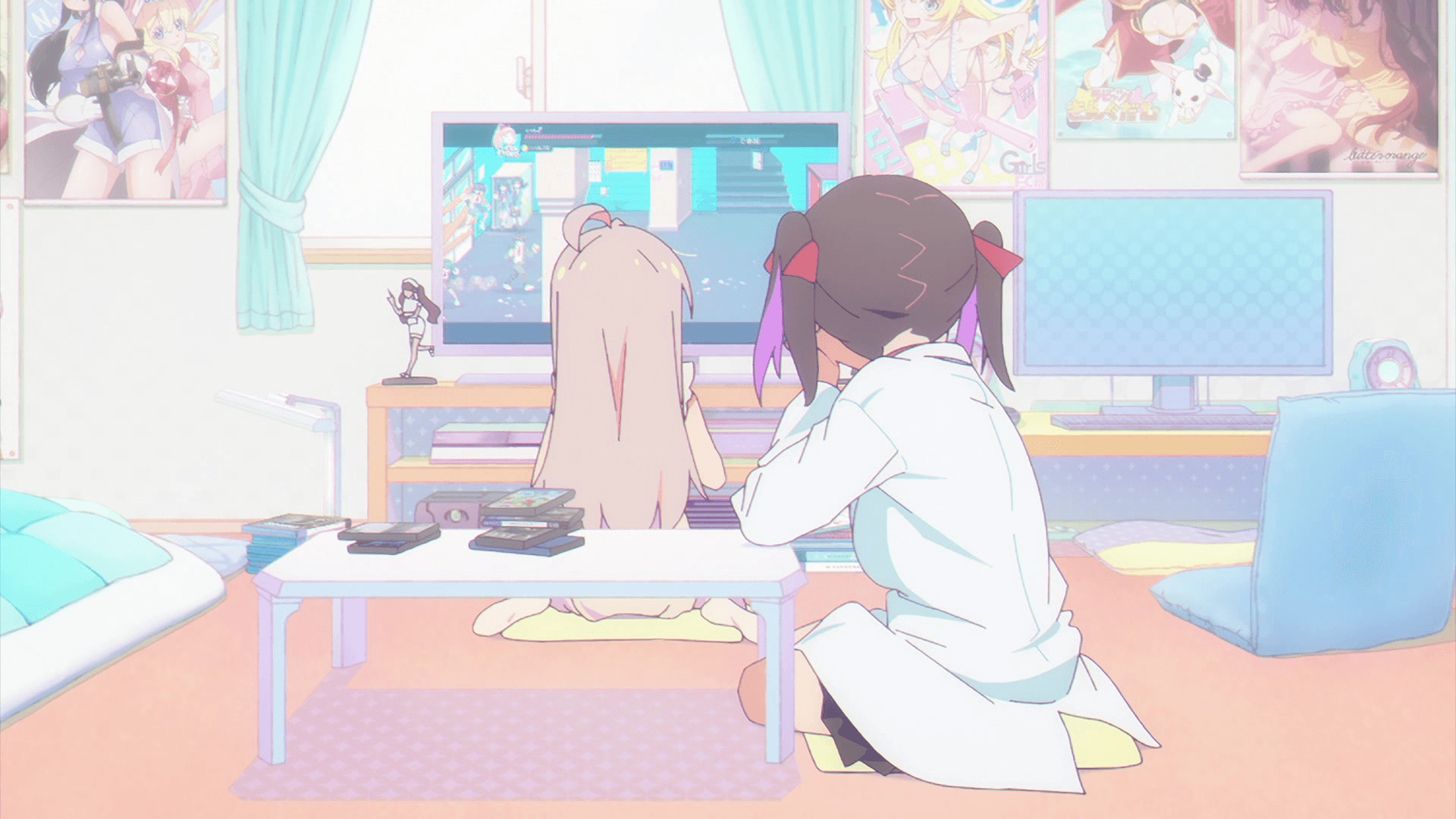
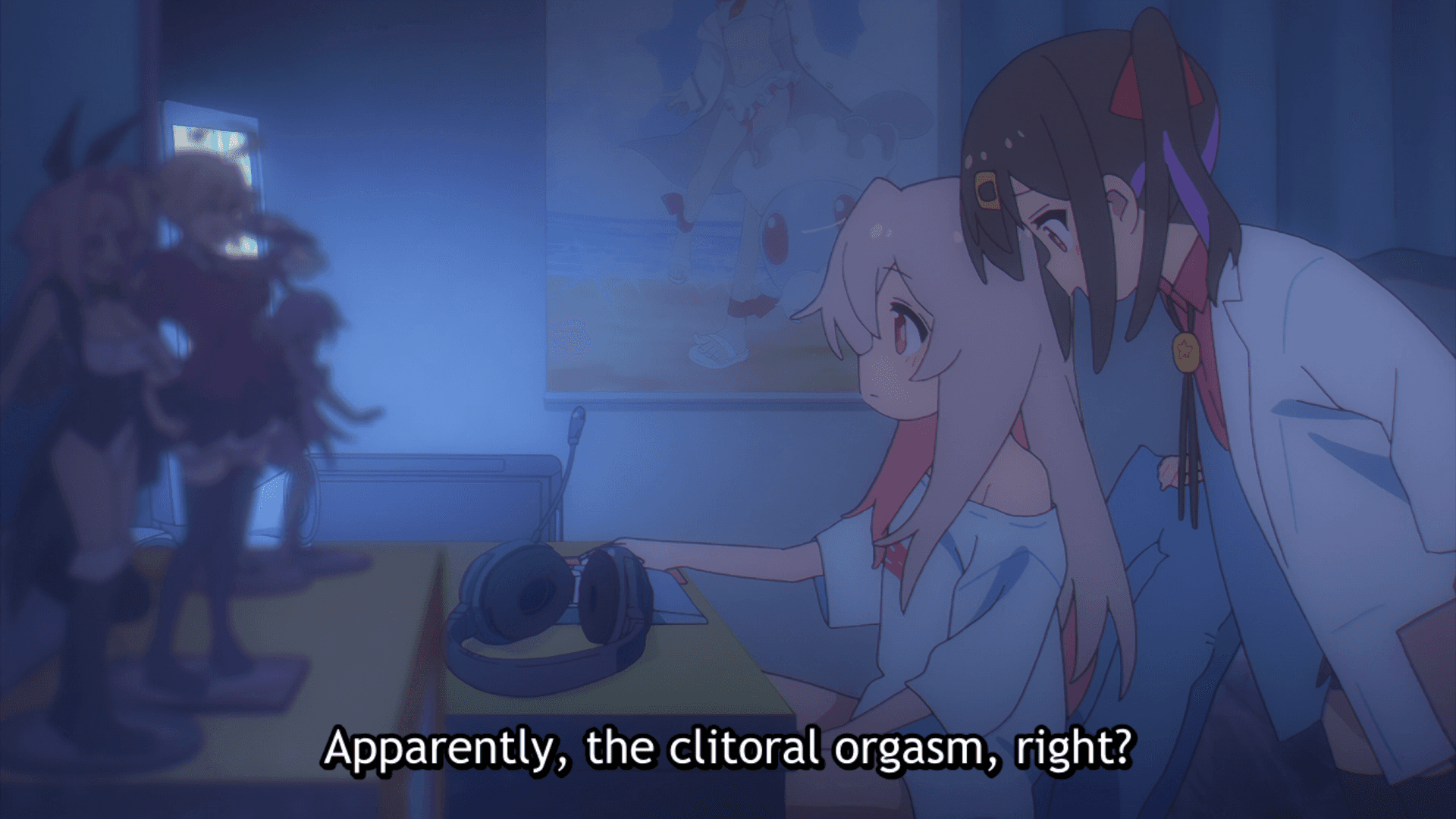
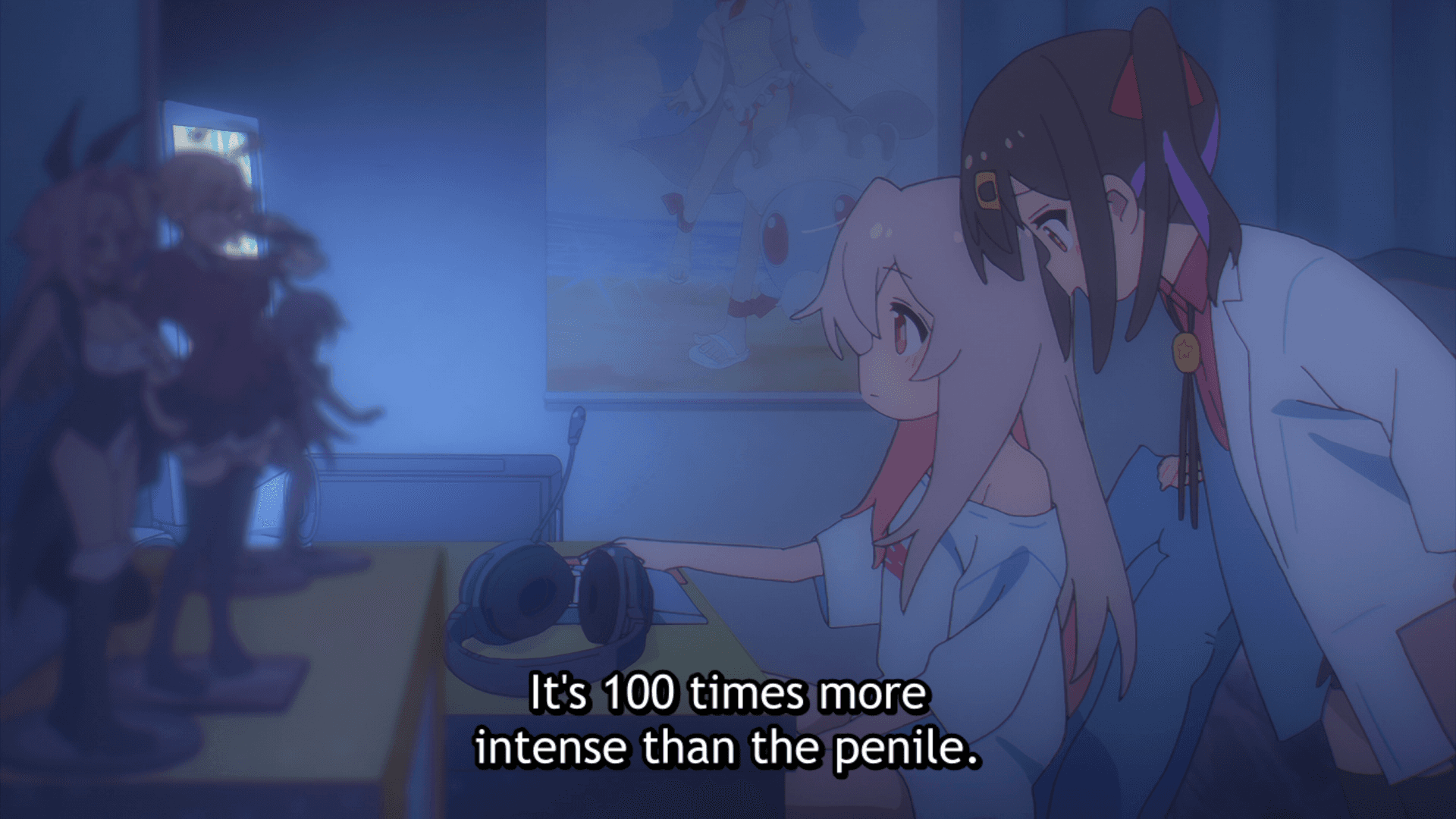
Let us once again return to Onimai’s opening scene in Episode 1. Prior to seeing Mahiro, wide shots of various otaku centric items like magazines, posters, and figurines inform us of his status as a (presumably) male otaku. His addiction to porn has expressed itself here via plethora, hierarchizing various objects of female signification and compartmentalizing their images into fetish objects for both his libido and, as such, his constitutive gender identity. The question then becomes whether Mahiro’s otaku identity constitutes, as is often assumed, a preexisting male gaze, or whether it foreshadows the more complex gender identity of “effeminate,” asexual, or queer male otaku. Assuming all of these answers are not mutually exclusive, Mahiro’s feminization thematizes this crisis of otaku gender identity through his transition of the subject/object dichotomy, and opens heteromasculine conceptions of otaku identity and Onimai to potential queer orientations.
One way I have come to read Onimai’s queer subtext is as an inverse Pygmalion, a mythological icon sometimes referenced within moé works. In Ovid’s Pygmalion, the titular misogynist sculptor deems the prostitutes of Cyprus as impure and seeks to create his own idealized image of femininity through sculpture. Eventually he falls in love with his own creation and prays for her to become flesh, a wish which the goddess Aphrodite grants. Moé characters designed by men and intended to evoke feminine purity and innocence, often within explicitly sexual contexts, make for easy parallels to the Pygmalion myth. However, most striking about Onimai is that its Pygmalion character, Mihari, is a girl who fashions a male/female subject into her ideal image of an older brother, and whose motivations for doing so, while somewhat self serving, are largely for the purposes of rehabilitation rather than objectification. In becoming himself a female object of signification, the subject/object dichotomy with which Mahiro had previously held between men and women collapses and he assumes all of the fetishistic affects of the moé characters that he has hitherto fetishized. Put another way, these wide shots of anime figurines serve to foreshadow Mahiro’s transition, as, in the same way that Mihari now fashions him like a doll, Mahiro, likewise, becomes the viewer’s moé character for projection and fetishization; his body is now the site by which embodied female subjectivity and male-projected fetishism exist simultaneously.
I find this aspect of Onimai particularly pertinent to the discussion of heteronormativity, because, in opposition to some other media about otaku rehabilitation, it acts as a counterpoint to the masculine epoch’s perceived gaze. For the sake of comparison, let us consider a popular series from the 2000s, Densha Otoko (“Train Man”). In Densha Otoko, the male otaku protagonist acquires a girlfriend after helping her fend off a drunk man on the subway. As their relationship progresses, the man changes his appearance and demeanor and, after having sex, decides to leave his otaku lifestyle behind for good. As Patrick Galbraith recounts in The Moé Manifesto, at the same time that excitement built around Densha Otoko as a social reconciliation between Japan and its troubled otaku sons, “some otaku protested the normative message of Densha Otoko—grow up and get a date!—and planted signs in Akihabara reading ‘Real Otaku Don’t Get Hot for the Three-Dimensional.’” (Galbraith, 19) Onimai, despite echoing the sentiment that physical relationships are essential to the betterment of one’s mental health, never places these sorts of normative expectations on Mahiro. Instead, Mahiro is told that, in order to be an ideal older brother, he must paradoxically become a good younger sister, thereby effectively discarding any expectation for him to conform to the masculine roles that had failed him previously, and, as such, allowed to maintain his otaku lifestyle into his girlhood.
Onii-chan Is Done For??? (Conclusion)
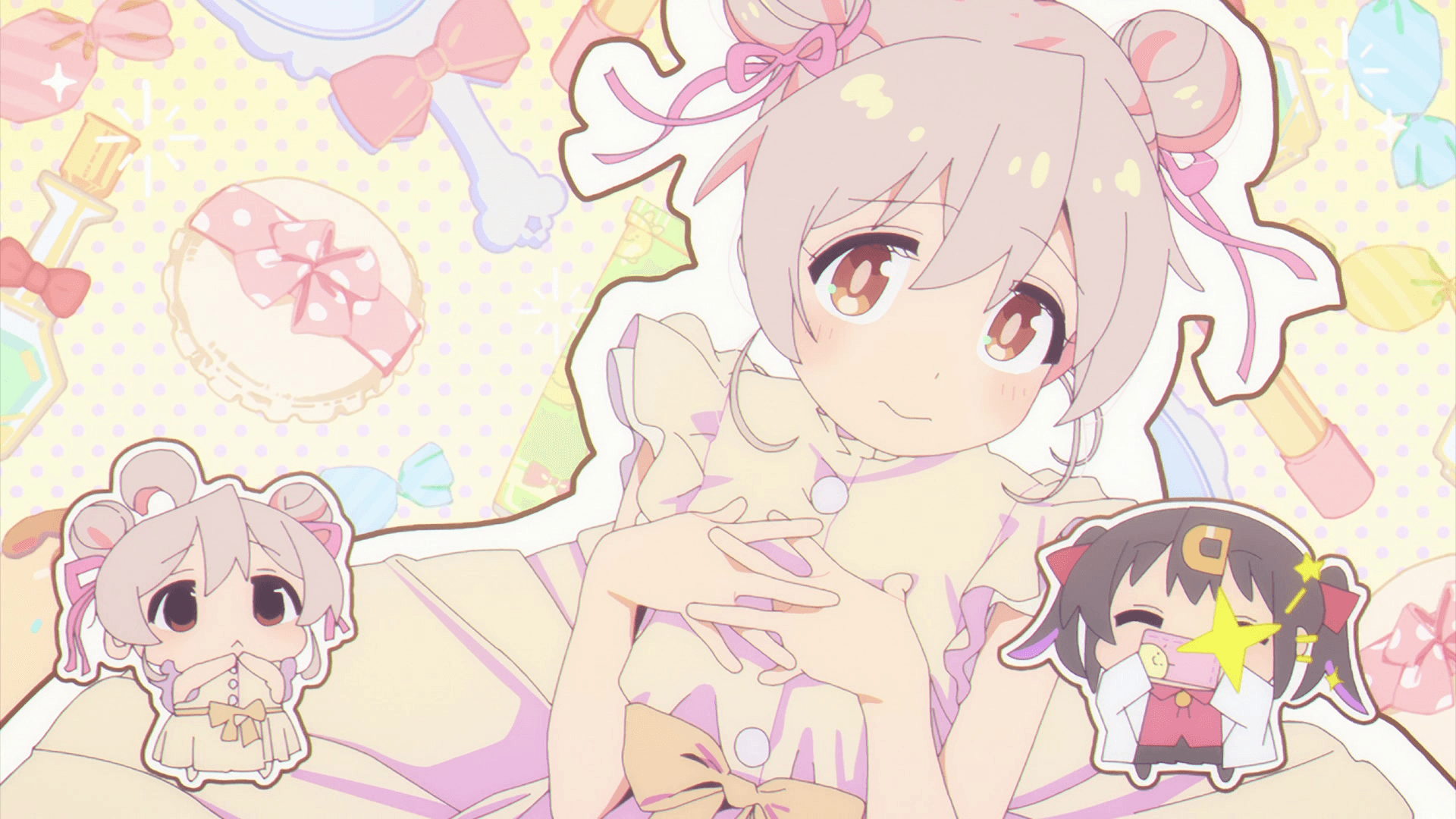
While writing this essay, I began reflecting on the title of the series, Onii-chan wa Oshimai, or “Onii-chan is Done For,” and it dawned on me what it may mean in a larger thematic sense. Initially I read “Onii-chan” purely by its gendered category of “brother” which comes to its supposed end when Mahiro transitions from male to female. However, “Onii-chan” also denotes age. With Mahiro’s regression from a twenty year old adult to a middle school girl, his status as an “older” brother also ends. Physically speaking, Mihari is now more mature, and this is a joke that is frequently played up by her genius IQ making her appear as the more mentally mature as well. Age in comics, or in any illustrated medium that depicts character images, must, like gender, be performed. This is especially signified in the Lolita character, whose body, behavior, age, and role within a narrative might all contradict each other, as is the case with Mahiro. Under this scrutiny, Mahiro’s body represents a series of paradoxes both cognitive and gendered. Kastel remarks upon this point:
“[O]ne of the things observed by characters who know her [Mahiro’s] identity… is that the most dramatic change comes not specifically from sex itself but from Mahiro regressing to a younger age…. Mahiro knows too much about sex for her young age, but she'll also act like a big baby. Onimai seems to suggest that the fantasy of age regression and age in general might play a huge factor on how we define gender.” (Kastel)
This is a point that I wish Kastel had spent more time on, because I don’t think we can properly read Onimai’s themes of fetishism without considering the significance of Mahiro’s age regression. As I have argued, fetishism is a phenomenological process that cannot be separated from the person projecting the fetish. While previously I have kept this to a gendered discussion, Mahiro’s age is, likewise, too important to disregard in matters of fetishism as the paradoxes inherent in his body confuse every one of his instincts that may have hitherto been believed to constitute normative masculine behavior.
Funeral Parade of Roses is the coolest movie ever.
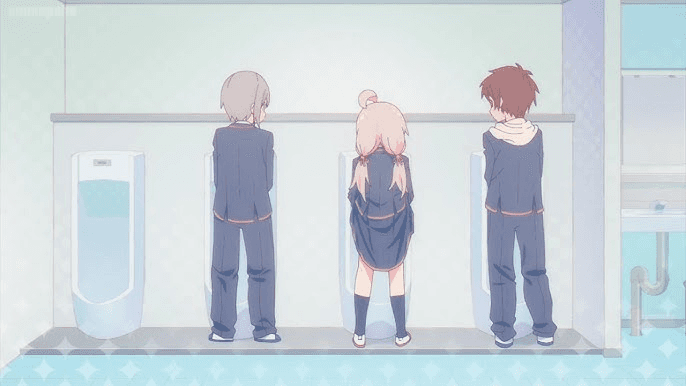
In the video essay, Boku Girl and the Anxious Body, YouTuber Pause and Select notes that the character of Loki in Boku Girl is presented as a loli “partly because it seems to emphasize the androgynous nature of the character inhabiting both male and female.” (Pause and Select) He then comments that Loki, despite being female, has a boy’s name much like Mahiro. Despite the two series’ many similarities, Onimai and Boku Girl become more interesting when considering their differences. Mizuki in Boku Girl is given the choice between a male or female romantic partner, but the one she accepts corresponds to her selected gender. If she remains a man, she will date a woman. If she becomes a girl, she will date a man. Despite Mizuki and her two romantic partners’ bisexuality becoming a central theme of the manga, this choice inadvertently echoes a problem of gender essentialism in regards to sexual orientation. This is opposed to Onimai where Mahiro’s sexuality becomes indeterminable following his transition. Having originally adhered to heteronormative male desires towards women, Mahiro later becomes addicted to Boy’s Love porn games (braggingly so) and questions his attraction to two of the boys in his class. At the same time, however, Mahiro’s attraction towards the female body never ceases. In posing bisexuality in this way, Onimai avoids categorizing heterosexuality and homosexuality as a phenomenon dictated by one’s genitalia, even if it acknowledges its role in the development of sexual preference and fetishism.
Miyo foils Mahiro most uniquely in this regard. From an audience perspective, one can assume that Mahiro’s attraction to women stems from his previously having a penis. However, Miyo, who was born and raised as biologically female, also displays an attraction towards women and lesbian intimacy completely irregardless of possessing a penis. Similarly, Momiji’s role as Mahiro’s most likely romantic candidate throws any semblance of a heterosexual or homosexual relationship into question as neither character fully embodies one gender or the other in any normative capacity. Both occupy a liminal space between male and female, and their anxious interactions epitomize this confusion of expectations and performance. Through these character foilings, Onimai posits that people are more than the simplistic binaries of nature and nurture. Epigenetic factors of one’s development become just as important to the constitution of one’s identity, as do gene-environmental correlations. The reason I note this is because, despite my frequent employment of psychoanalysis, I want to position Onimai as a post-Freudian work in its non-pathological treatment of fetishism, sexuality, and queerness.
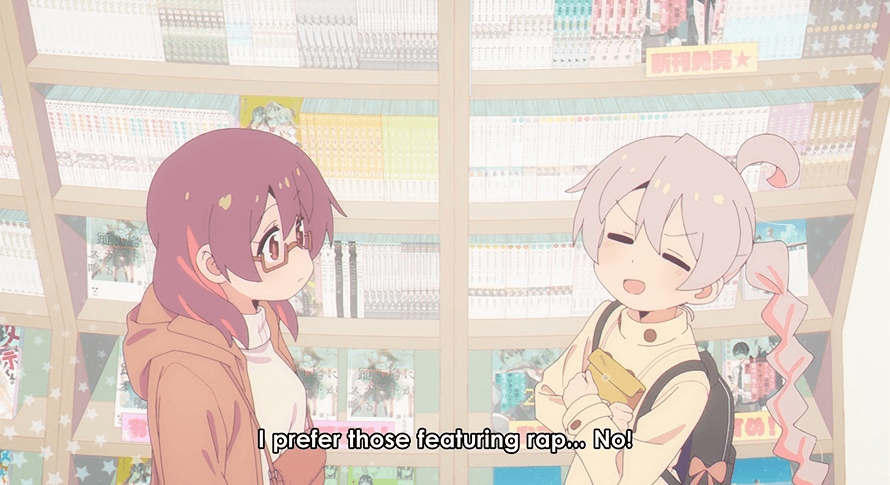
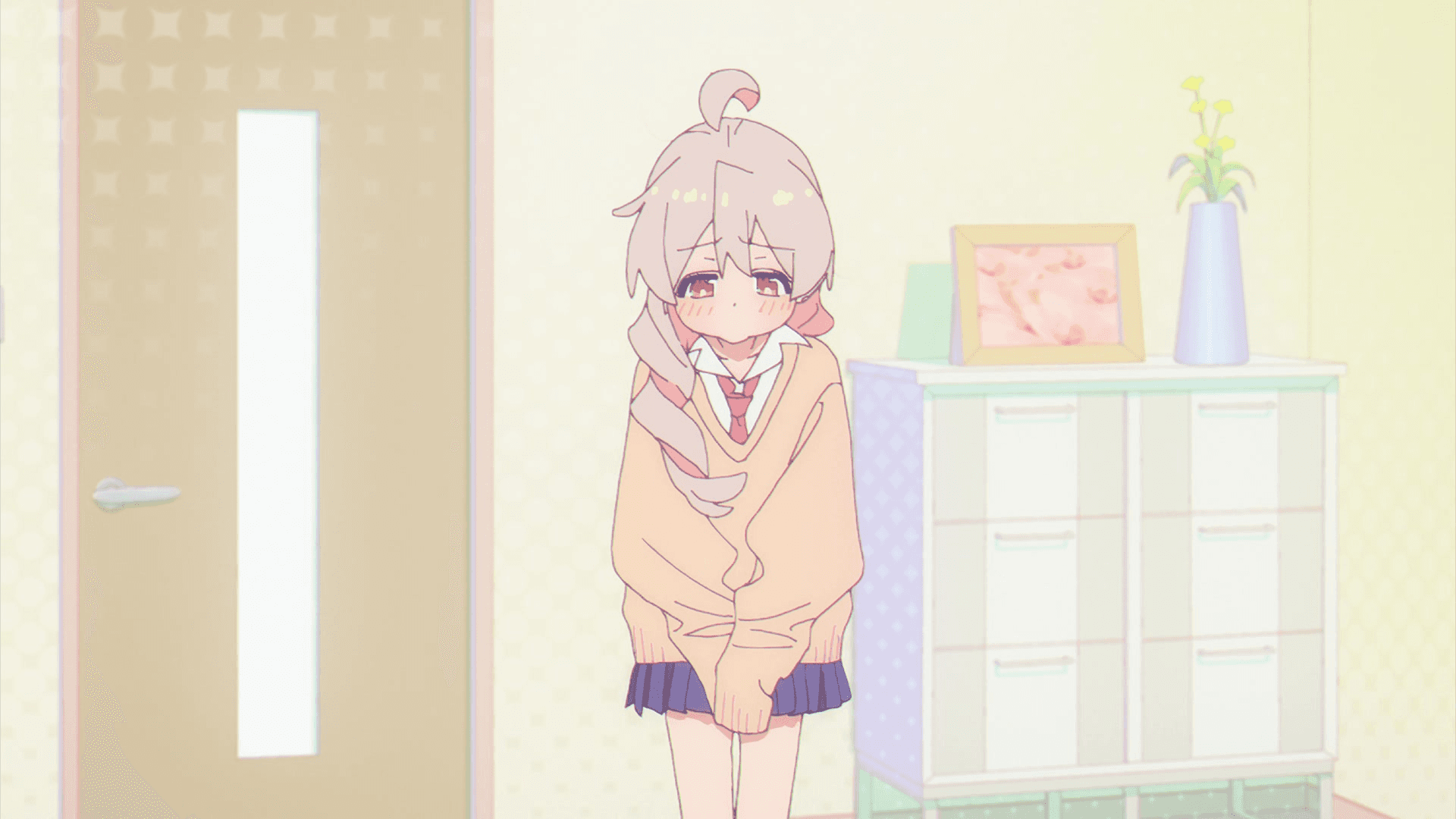
Careful what you say, Mahiro!
Returning to our contrasting with Boku Girl, Boku Girl does not feature age regression like Onimai does. While both series use adolescence as a thematic basis for the construction of gendered identities, Onimai specifically introduces the theme of time dilation. Time dilation is a smaller theme within Onimai and is only explored through its sibling protagonists. Mahiro regresses in age while Mihari skips grades and attends college early, resulting in, as Kaede points out in Episode 12, her missing out on school events. It is noteworthy that this fact is brought up directly following Mahiro’s choice to remain a girl as it draws a thematic parallel between the two siblings who, in forming a close social habitat, have finally caught up on the time they’ve lost.
But the question stands: what correlation does time dilation have to queerness specifically? After giving it some thought, I found my answer through my own anecdotal experiences. When discussing gender identity with my transgender friends, many of them have lamented that they experienced a sort of discombobulation during their formative years due to their being forced to repress their identities. Furthermore, in just about every case in which my friends transitioned from male to female, they expressed confusion over their sexual orientation as a result of interpreting their desire to be feminine as stemming from predatory male libido. What actions and behaviors they otherwise would have considered normative for their gender identity were externally viewed as fetishistic by way of their biological sex, the consequences manifesting in their transitions when they feel like so much of their lives have been robbed from them.
This time dilation and the ensuing desire to “catch up on lost time,” in my opinion, best explains Onimai’s themes of age regression, infantilism, and urination fetishism. For Mahiro as a character, his years living as a biological man and performing as such have instilled within him skepticism over what actions and behaviors constitute fetishism and normativity. If we wish to interpret Mahiro pre-transition as already subconsciously desiring an escape from his masculine conception, be that from the perspective of a failed man (otaku identity), a closeted queer person (the queer identity), or some level of both, then his conception of fetishism and, by extension, the viewer’s conception of fetishism must be forcefully reconstituted over and over again via embarrassing and sexually charged contrivances arising from the body itself. The anxiousness that results from bodily malfunction destabilizes Mahiro and forces him to continually, over and over and over again, reconstitute his identity until he becomes comfortable as an embodied queer subject. This means looking at pee queerly. This means seeing your most basic instincts as exotic.
Although Onimai states that “Onii-chan” may be done for, Mahiro is not. It may take some time for her to figure things out. A lot of time. Many extra years worth. Thankfully, her loving older sister will see to it that she has all the time that she needs.
Thank you for reading.
Database:
Kastelpls’ (@HighImpactSex) “On the Perverted Stuff in Perverted Fiction: Onimai and Piss Jokes” https://cohost.org/highimpactsex/post/7172243-on-the-perverted-stu
Judith Butler’s “Gender Trouble: Feminism and the Subversion of Identity” (1990) https://selforganizedseminar.wordpress.com/wp-content/uploads/2011/07/butler-gender_trouble. pdf
Sandra Hampson’s “The Decadent Decades: A Phenomenology of Fetishism in the Turn-of-the-Century French Novel” (1996) https://www.proquest.com/docview/304250812?pq-origsite=gscholar&fromopenview=true
Sigmund Freud “Fetishism” (1927) https://cpb-us-w2.wpmucdn.com/portfolio.newschool.edu/dist/9/3921/files/2015/03/Freud-Fetishi sm-1927-2b52v1u.pdf
Karl Marx “Capital Volume 1” (1887) https://www.surplusvalue.org.au/Marxism/Capital%20-%20Vol.%201%20Penguin.pdf
William Pietz “The Problem of the Fetish” (1985) https://english.hku.hk/staff/kjohnson/PDF/PietzWilliamRESfetishPART1spring1985a.pdf
Gomi-san’s “Everyone is Wrong About Onimai” (2023) https://youtu.be/Eu_XfARjjXw?si=8W-RVe8QexAFAE2P
Patrick Galbraith’s “The Moe Manifesto: An Insider’s Look At the Worlds of Manga, Anime, and Gaming” (2014) https://archive.org/details/moemanifestoinsi0000galb
Hiroki Azuma’s “Otaku: Japan’s Database Animals” (2001) https://mogami.neocities.org/files/otaku.pdf
Tamaki Saito’s “Beautiful Fighting Girl” (2000) https://academic.oup.com/minnesota-scholarship-online/book/19812
Thomas LaMarre’s “The Anime Machine: A Media Theory of Animation” (2009) https://film7000.wordpress.com/wp-content/uploads/2014/10/thomaslamarre-2009-theanimemac hine.pdf
Pause and Select’s “Boku Girl and the Anxious Body” (2017) https://youtu.be/JpGmIS-Mru4?si=qTdJ3rZ2TDwmn5h
Comments
